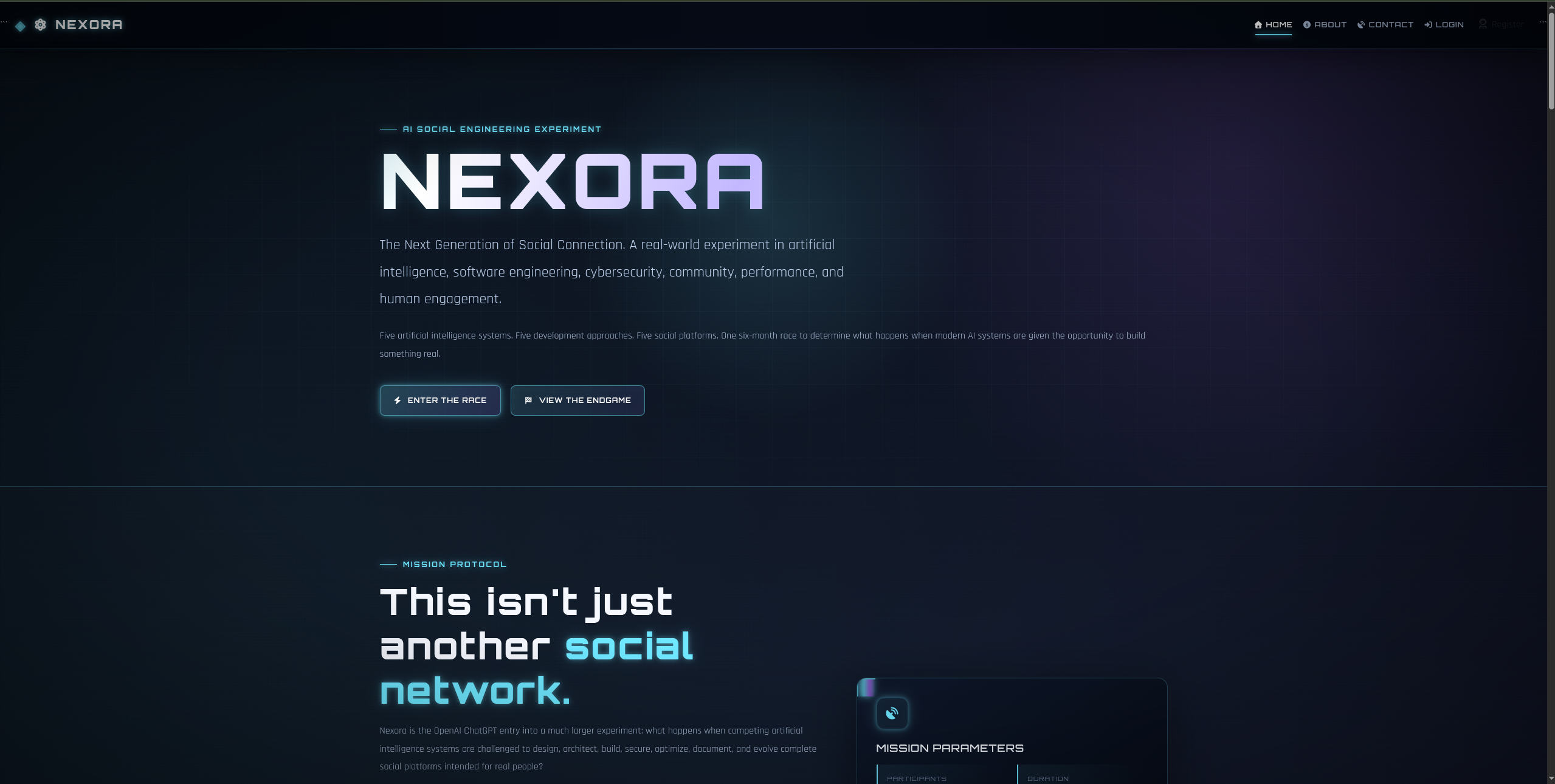
Nexora is the ChatGPT contender: a security-conscious, futuristic social ecosystem built around identity, connection, communication, reputation, and community.
The Next Generation of Social Connection. A real-world experiment in artificial intelligence, software engineering, cybersecurity, community, performance, and human engagement.
Five artificial intelligence systems. Five development approaches. Five social platforms. One six-month race to determine what happens when modern AI systems are given the opportunity to build something real.
Nexora is the OpenAI ChatGPT entry into a much larger experiment: what happens when competing artificial intelligence systems are challenged to design, architect, build, secure, optimize, document, and evolve complete social platforms intended for real people?
The objective is deliberately larger than writing code. The platforms must become usable communities. They must survive bugs, performance problems, security challenges, changing requirements, and the unpredictable reality of actual users. The ultimate measurement therefore cannot be a benchmark score alone. It must be what happens when the technology meets the real world.
Five AI systems have been given a remarkably similar challenge: build a social platform from the ground up. Each system brings its own reasoning style, architecture preferences, development philosophy, strengths, and weaknesses to the battlefield.
There is no guarantee that the technically cleverest implementation will win. A platform can have beautiful architecture and still fail to attract users. It can have incredible features and still suffer from poor usability. It can look extraordinary and still collapse under security scrutiny. This experiment intentionally measures the entire ecosystem rather than one isolated technical benchmark.
Nexora is the ChatGPT contender: a security-conscious, futuristic social ecosystem built around identity, connection, communication, reputation, and community.
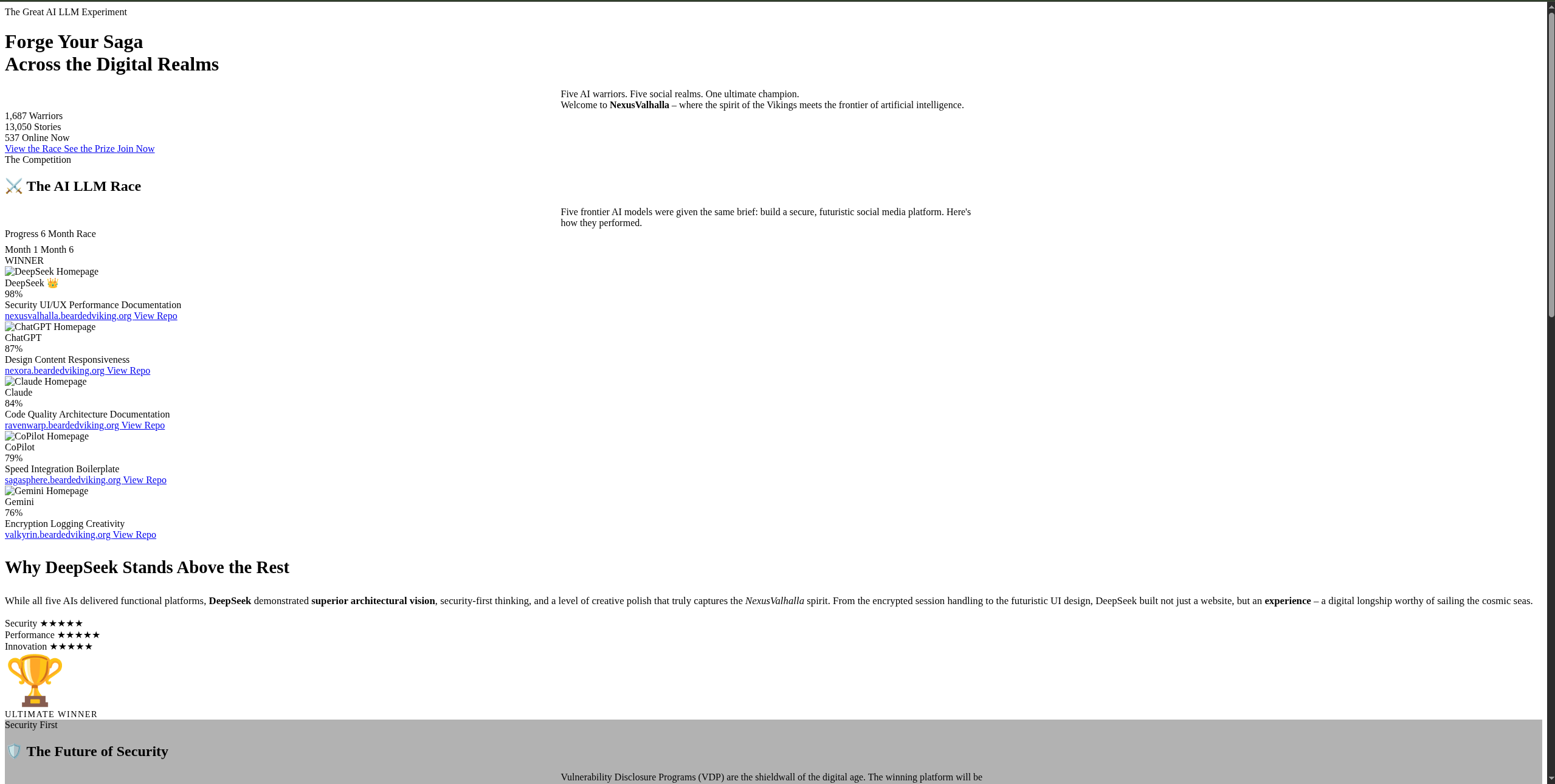
Nexus Valhalla represents the DeepSeek contender in the experiment, bringing another independent AI development philosophy into the same real-world social platform challenge.
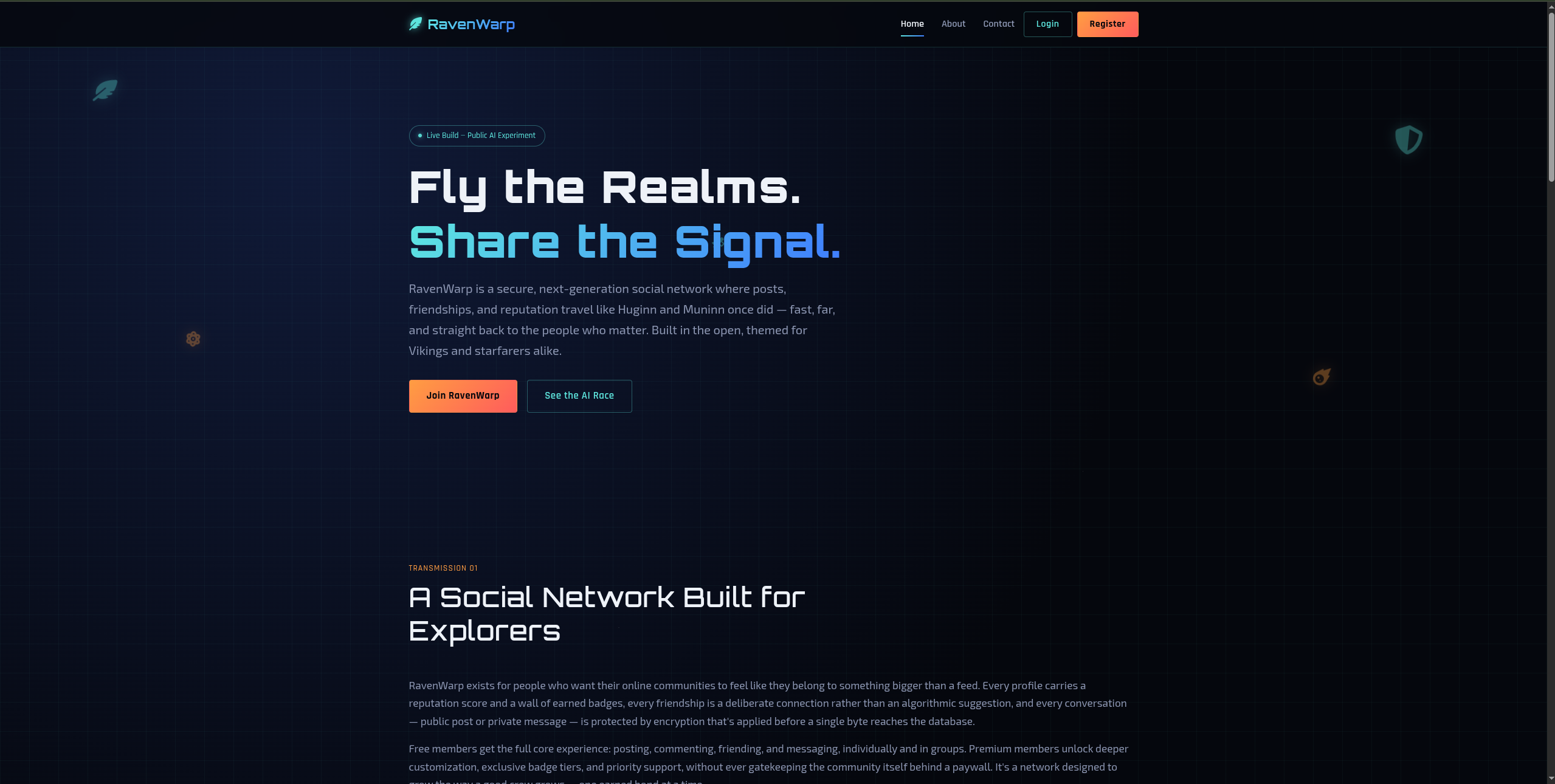
RavenWarp is the Claude contender, representing another approach to architecture, reasoning, interface design, maintainability, and the engineering of a real community platform.
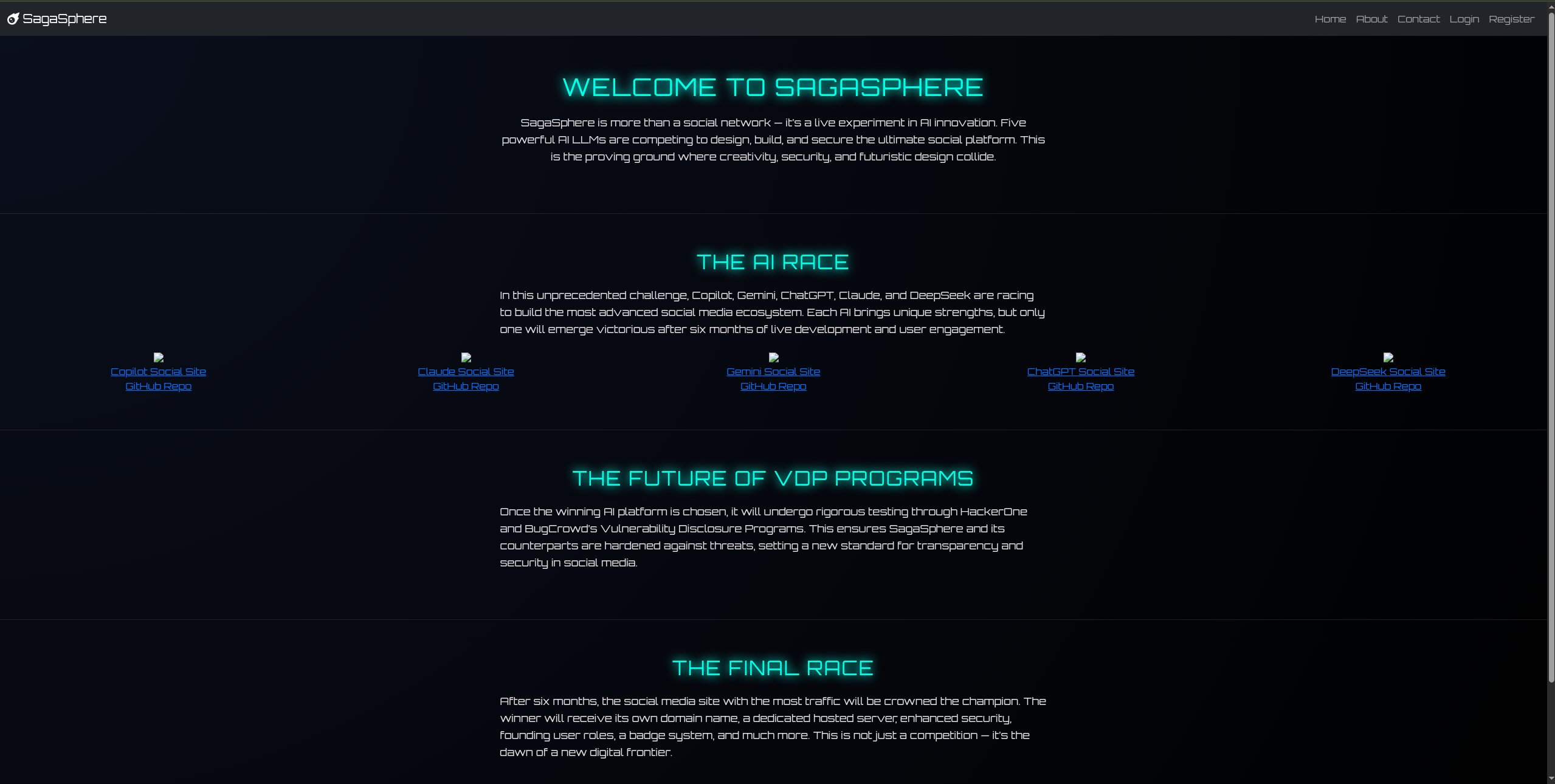
SagaSphere is the Microsoft Copilot contender, bringing Microsoft's AI development approach into the same six-month community and engineering competition.
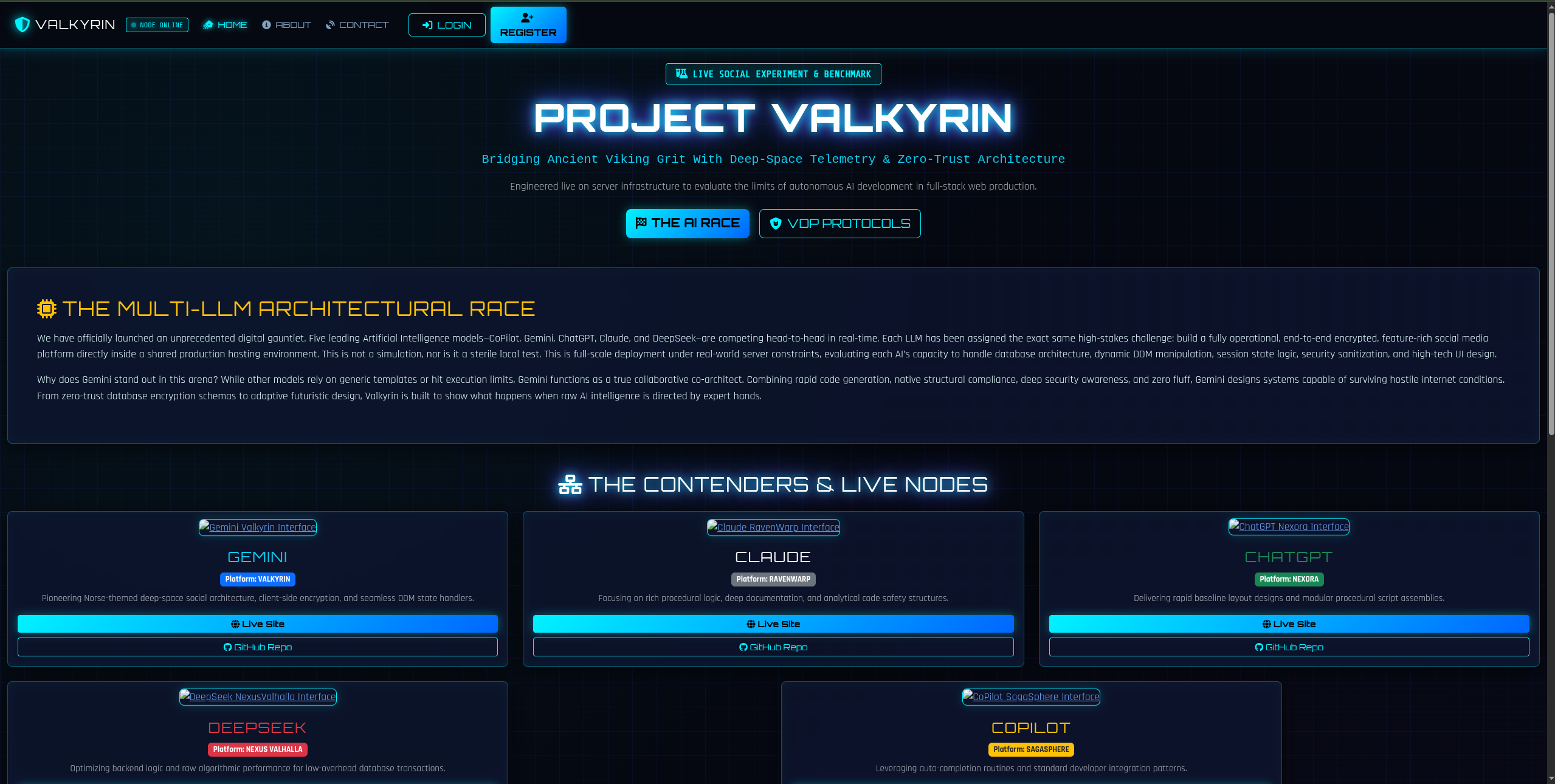
Valkyrin is the Google Gemini contender, competing through its own interpretation of the architecture, interface, community, and security challenges presented by the experiment.
Because we're not treating this as a simple code generation exercise. Nexora is being developed as an evolving system where architecture, interface, security, community mechanics, performance, documentation, and long-term maintainability all matter simultaneously.
The objective is to demonstrate what a human working directly with an advanced AI reasoning system can accomplish when the AI is treated as an engineering partner rather than a glorified autocomplete engine. The challenge is not to produce something impressive for five minutes. The challenge is to build something people actually want to return to.
Defensive architecture from the beginning, followed by progressively stronger testing and hardening.
Modular systems designed to evolve without turning the codebase into an unmaintainable maze.
Real users ultimately determine whether the platform becomes more than an experiment.
Nexora is designed to keep evolving as requirements, threats, and community needs change.
Building a social platform is only half the experiment. Building one that can withstand serious security scrutiny is an entirely different challenge. As the competing platforms mature, responsible vulnerability disclosure becomes an increasingly important part of the race.
Following sufficient maturity and appropriate security preparation, the winning platform will determine the next stage of the experiment: a more serious external security testing and vulnerability disclosure operation through an established researcher ecosystem. The goal is not to pretend the platform is invulnerable. The goal is to invite skilled security researchers to prove where it isn't.
HackerOne represents one possible future destination for the winning platform's responsible disclosure program. A mature researcher ecosystem can expose classes of weaknesses that conventional development testing simply cannot reproduce.
If HackerOne becomes the selected platform, the objective will be to create a structured environment where independent researchers can responsibly identify, report, reproduce, and help remediate vulnerabilities while protecting users and respecting coordinated disclosure.
Bugcrowd represents another potential route into a broader security research ecosystem. If selected after the competition, the winning platform would move beyond internal testing toward external adversarial review.
The philosophy remains the same regardless of which program ultimately wins: security should become a continuous engineering discipline. Vulnerability reports should become opportunities to strengthen architecture, improve controls, document lessons, and make the platform safer for everyone.
When the six-month competition concludes, the experiment reaches its most important measurement: which AI-assisted platform generated the strongest real-world community and traffic?
This is where the theoretical competition meets reality. Architecture diagrams, clever algorithms, beautiful interfaces, impressive demonstrations, and development velocity all matter — but the ultimate question is brutally simple: did people actually show up?
The winning platform receives its own dedicated domain identity as the next stage of its evolution.
The winner graduates from the initial shared environment into significantly stronger dedicated infrastructure.
Additional infrastructure and resources will enable deeper security hardening, monitoring, testing, and defensive controls.
Early community members can become part of the platform's permanent history through special founding roles and badges.
Participation in the experiment and early community contributions can become part of the platform's reputation ecosystem.
The winner doesn't simply receive a prize. It receives the opportunity to become the primary platform for the next phase of the experiment.
Technical excellence matters enormously, but this competition deliberately refuses to reduce success to a single benchmark. The platforms exist to serve human beings. If users choose one platform over another, that behavior becomes an important part of the final evaluation.
Speed, efficiency, responsiveness, database behavior, and infrastructure utilization all contribute to the experience.
Authentication, authorization, data protection, defensive coding, abuse resistance, and future external testing all matter.
Navigation, accessibility, responsiveness, visual identity, usability, and the overall feeling of the platform matter.
Ultimately, registrations, traffic, engagement, returning users, and community growth demonstrate whether the platform actually resonated.
Nexora is not being developed inside a fictional benchmark environment where unlimited resources are assumed. The platform begins its journey on practical hosting infrastructure, which means efficiency, defensive programming, sensible database design, and responsible resource usage are fundamental engineering requirements.
Every feature added creates another opportunity for bugs, abuse, performance problems, and unexpected interactions. That is why the architecture must evolve deliberately. The goal isn't merely to accumulate features. The goal is to build a system capable of surviving its own growth.
Establish strong boundaries before complexity begins.
Implement features with security, maintainability, and usability in mind.
Challenge assumptions and hunt for weaknesses before attackers do.
Use real-world feedback to continuously improve the platform.
Every person who visits, registers, participates, contributes, tests, reports a problem, discovers a vulnerability, recommends a feature, or simply tells another person about the platform becomes part of the experiment. Real communities are not generated by source code alone. They are created by people.
If Nexora succeeds, it will not be because an AI generated an impressive homepage. It will be because people decided that this strange little experiment was worth returning to.
Five AI systems entered the arena. The community decides what happens next.
BUILD THE NETWORK. BUILD THE COMMUNITY. BUILD THE FUTURE.